

How to Organize Your Kitchen for Real Life (Not Pinterest)
If your kitchen counters are covered in more paper than your inbox, or you’ve ever bought another jar of paprika because you couldn’t find the first one…welcome. You’re in the right place.
The kitchen is the heart of the home — and also the place where clutter seems to multiply overnight (like the Japanese beetle bugs we have in GA right now). Between groceries, gadgets, kids’ snacks, and that random drawer of mystery items, it’s easy for things to spiral.
So if you’re craving a calmer kitchen, with less visual noise, and fewer decisions to make each day, then follow along as we create your intentional kitchen.
Good News:
Organizing your kitchen doesn’t require a full renovation, a rainbow of matching bins, or a personality transplant. You just need a little intention and a plan that actually works for real life (and YOU).
Start With How You Actually Use Your Kitchen
Before you touch a single drawer, pause for a moment.
Kitchens often become cluttered when the setup doesn’t match how it’s used day-to-day.
When an organizing system fights your habits, clutter wins every time. So instead of aiming for a magazine-worthy kitchen, aim for a functional one that supports your routines.
Before you do anything, look around your kitchen and ask:
Where do you prep most of your meals?
What do you reach for every single day?
Which cabinets feel annoying to open (you know the ones)?
These questions help you identify friction points — the places where things aren’t working. That’s where organization will have the biggest impact.
Another great question to ask yourself is, “What do I actually want my kitchen to support?”
For many homes, the answer is simple:
Preparing meals with less stress
Spending more time together
Cleaning up quickly and easily
When you’re clear on the purpose of your kitchen, it becomes easier to let go of anything that doesn’t support it.
PRO TIP: Store everyday items where you use them. Coffee mugs near the coffee maker. Cooking tools near the stove. Snacks that kids can reach without climbing the shelves like Spider-Man.
When your kitchen is organized around real life, everything starts to feel easier.
Remove the Excess: Declutter First
It’s tempting to jump straight to containers and labels, but decluttering is the foundation of any organization project - kitchen or otherwise!
When you remove what you no longer use or need, you instantly create space - and make every organizing decision after that much simpler.
This doesn’t mean getting rid of everything. It means being thoughtful about what earns space in one of the most-used rooms in your home.
Consider letting go of:
Expired food and spice you’ve had forever
Gadgets you never use (we’re looking at you, avocado slicer)
Mismatched containers without lids - they’re not coming back
Decluttering doesn’t have to be dramatic or all-or-nothing. This isn’t about minimalism — it’s about usefulness.
If you wouldn’t buy it again today, it might be time to say goodbye. And if you’re unsure that’s okay. Progress beats perfection here, too.
Common Things to Declutter in Your Kitchen
If you’re not sure where to start, you’re not alone. Kitchens tend to collect the same types of clutter over and over again.
Here are some of the most common kitchen items that are ready to move on:
Expired food, spices and pantry items
Duplicates kept “just in case”
Items used once a year (or less)
Gadgets that complicate simple tasks
Mismatched food storage containers and lids
Excess coffee mugs and water bottles
Decor that takes up functional space
Instruction manuals for appliances you’ve owned for years
Junk drawer odds and ends that don’t belong anywhere else
Decluttering even a few of these categories can create instant breathing room.
Once you’ve cleared what you no longer need, organizing what remains becomes much easier — and far more satisfying.
Create Simple, Clear Zones
Once you’ve decluttered, it’s time to group items by purpose. This is where kitchens really start to feel calmer and more intuitive.
Zones help everyone in the household know where things belong — which means less searching, fewer questions, and faster clean-up.
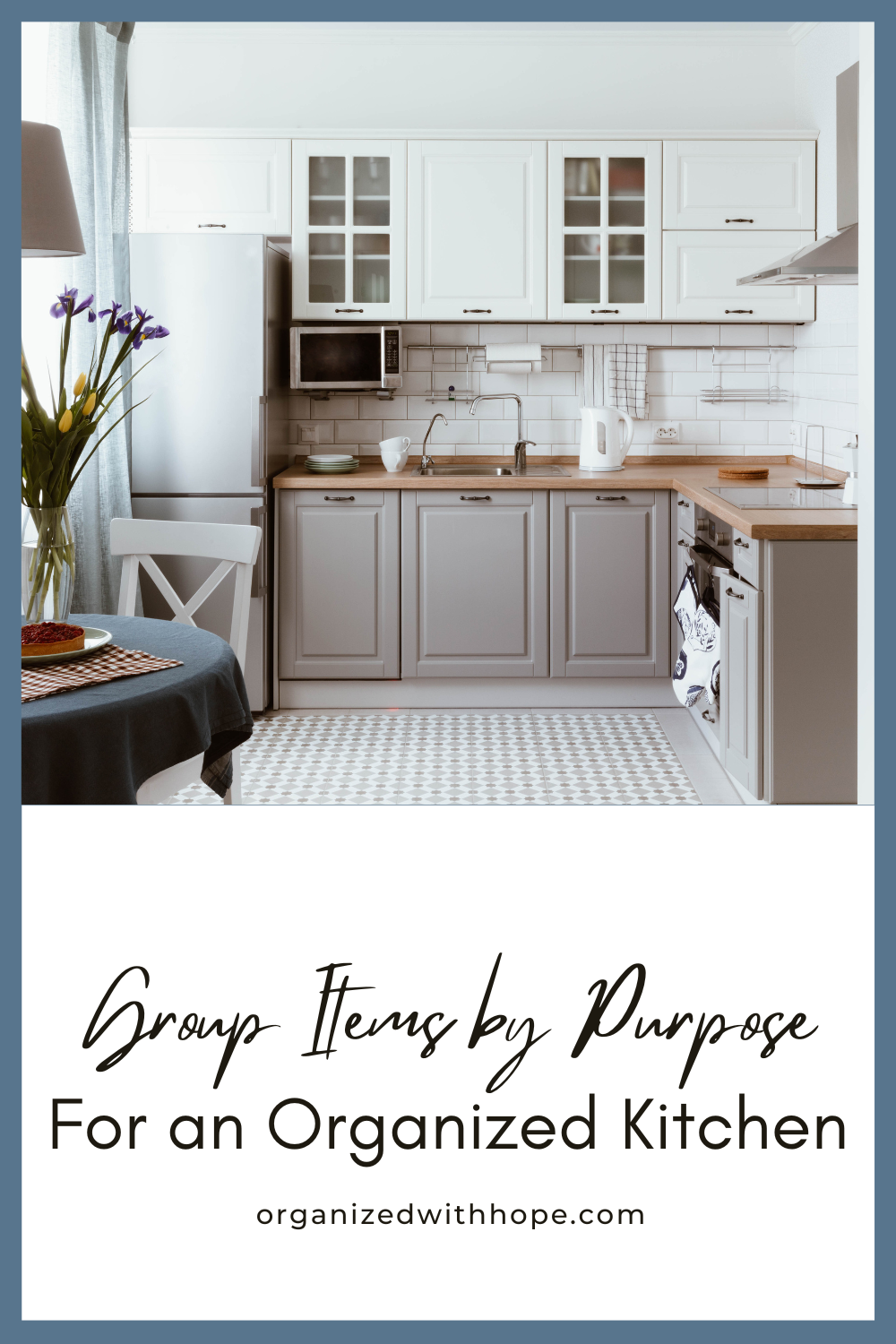
Common kitchen zones include:
Prep Zone: cutting boards, knives, mixing bowls
Cooking Zone: pots, pans, utensils, oils, spices
Food Storage Zone: pantry items, snacks, lunch supplies
Clean-Up Zone: dishwasher supplies, trash bags, towels
You don’t need a perfect number of zones — just enough structure to support how your household functions.
When everything has a home, clean-up gets faster and decision fatigue disappears. That’s organization doing its job.
A Note on Mini Family Command Centers (Especially for Small Homes)
In many homes — especially smaller ones — the kitchen is the hub. Mail lands here. Schedules get discussed there. Permission slips mysteriously appear there.
If there’s no separate space for a family command center, it’s okay to intentionally build one into your kitchen.
A simple kitchen command center might include:
A small tray or bin for incoming mail and papers
A wall-mounted calendar or dry-erase board
A labeled folder for school or activity paperwork
A charging station for phones or tablets
The key is containment. Giving papers and schedules a define home keep sthem from spreading across every counter.
When it’s intentional — and limited — a kitchen command center can support your household rather than adding to the clutter.
Use Containers as Tools Not Decorations
Containers can be incredibly helpful — but only when they’re used intentionally.
The goal isn’t to buy matching bins for the sake of a Pinterest-worthy pantry. It’s to create simple systems that keep items visible, accessible, and easy to put away.
Think function over perfection:
Use clear containers so you can see what you have
Choose sizes that fit your shelves and your categories
Label when it helps — especially for shared spaces
Remember: containers should support your system, not complicate it.
My Favorite Simple, No-Frills Organizing Tools
Professional organizers tend to reach for the same tried-and-true tools — not because they’re trendy, but because they work.
These are simple, functional favorites that support almost any kitchen:
Drawer dividers: Perfect for utensils, gadgets, and junk-drawer containment
Clear bins: Great for pantries, fridges, and deep cabinets where visibility matters
Turntables (lazy Susans): Ideal for oils, condiments, and hard-to-reach corners
Shelf risers: Helpful for doubling usable space in cabinets
Label holders or basic labels: Useful for shared spaces and easy resets
Nothing fancy. Nothing fragile. Just tools that make it easier to keep your kitchen organized day after day.
NOTE: Never purchase your bins or tools before decluttering. Take stock of what you need to store first!
Make It Easy to Maintain
A beautifully organized kitchen isn’t helpful if it only lasts a week.
The best systems are simple, flexible, and easy to reset — even on busy days when no one feels like organizing.
Maintenance doesn’t need to be complicated. Small, consistent resets keep clutter from piling up.
Progress beats perfection every time.
A few maintenance-friendly habits:
Keep counters mostly clear
Do a quick pantry reset once a month
Revisit systems when life changes — because it will
When to Call a Professional Organizer
If your kitchen feels overwhelming, emotional, or just plain stuck, you don’t have to do it alone.
I can help you:
Make decisions faster
Create systems tailored to your household
Turn your kitchen into a space that supports your life — not stresses you out
And no, your homes doesn’t have to be “Pinterest-perfect” to deserve support. I’m here to help and never judge your space.
Final Thought
An organized kitchen isn’t only about having less stuff — it’s about having space to breathe, cook, and gather.
Start small. Be kind to yourself. And remember: calm kitchens are built one drawer at a time.
Need help bringing order to your kitchen? We can make it easier AND faster than you think!
